
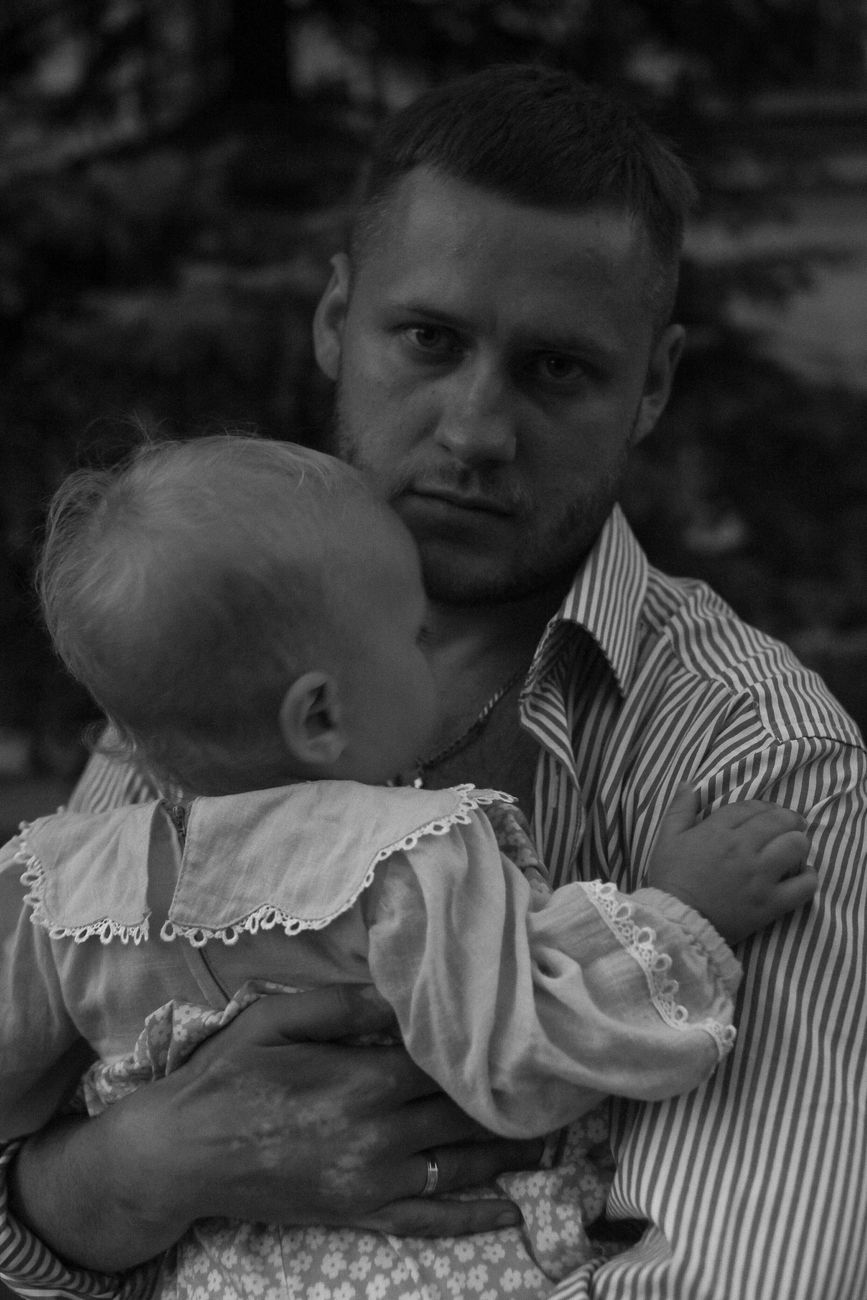
He swore he would do it differently. And then he’s standing next to a screaming baby at 3 a.m., feeling a rage that doesn’t seem like his own. Or he notices himself pulling away the moment things get emotional – exactly the way his own father did.
The father wound isn’t a clinical diagnosis. It describes the emotional marks left by a father who was absent, cold, unpredictable, or narcissistic. Many men carry it for decades without noticing. It often becomes visible only at the moment they become fathers themselves.
What is the father wound?
Children need two things from their caregivers: safety and mirroring. A father who shows up, listens, and can tolerate feelings tells a child: You are okay just as you are. When that’s missing, the child learns something else. That love has to be earned through performance, for example. Or that feelings are dangerous.
The father wound can take many forms:
- The absent father: physically gone through divorce, work, or lack of interest
- The emotionally absent father: present, but unreachable – he provides, but he doesn’t connect
- The strict or punishing father: love only comes with obedience and success
- The narcissistic father: the child serves as an extension of his ego, and any deviation is punished with coldness, mockery, or anger
Sons in particular often absorb a double message: “Be like me” – and at the same time, “You’ll never be good enough.”
Why the father wound breaks open in fatherhood
A baby is pure need. It cries, clings, demands closeness, and can’t be controlled. For a man who learned as a child to suppress his own needs, that’s an enormous confrontation. His nervous system remembers his own childhood long before his mind does.
Then there’s the role shift. Suddenly, he is the father. But his inner picture of what a father is comes from his own childhood. Without a good role model, stress often pulls him right back into the patterns he never wanted to repeat.
How the father wound shows up in men who become fathers
1. Withdrawing when things get emotional. He functions, works more, handles the practical stuff. But when the baby cries or his partner is overwhelmed, he goes quiet or leaves the room. Not out of indifference, but because he never learned how to sit with feelings.
2. Sudden anger or irritability. A crying child can trigger a disproportionate reaction in men with a father wound. The body switches into fight mode, because childhood helplessness once meant danger.
3. Overcompensating. The flip side of withdrawal: he wants to get everything perfect, reads every parenting book, controls every decision. Underneath is often the fear of turning into his own father.
4. Providing instead of connecting. He shows love through provision: the house, the career, financial security. That matters. But children need presence above all – and that’s exactly what’s hardest for him.
5. Jealousy of the baby. A taboo topic. Some men feel pushed aside by the bond between mother and baby. With a father wound, this often hits an old pain: the feeling of not being seen.
6. Hearing his father’s words come out of his mouth. “Stop crying.” “Toughen up.” “Boys don’t cry.” And in that same moment, the jolt: That’s what my dad always said.
7. Old conflicts with his own father reignite. Grandpa wants a say, criticizes the parenting, or ignores the grandchild. Old wounds become current again.
When his own father was narcissistic
With a narcissistic father, there’s an additional layer. Many sons of narcissistic fathers learned that their feelings didn’t count and that weakness invited contempt. Some develop strong people-pleasing patterns (read more about Fawning – the fourth stress response), while others adopt parts of the dominant behavior, because it was the only model of masculinity they ever knew.
Important: noticing narcissistic patterns in yourself and suffering from them doesn’t automatically make you a narcissist. Being able to question your own behavior is actually a good sign.
For partners: how to understand him without losing yourself
Many women read this article because they barely recognize their partner since the baby arrived. Understanding his story is valuable. But it doesn’t mean you have to carry or excuse his behavior. A father wound explains withdrawal or anger – it doesn’t justify belittling, control, or violence. Only he can do the healing. You can encourage him, but you’re not his therapist.
How healing becomes possible
- Name it instead of burying it. The first step is the sentence: “This has to do with my father.” It takes the shame out of the equation.
- Understand the nervous system. Anger and withdrawal are stress responses. Noticing them early (tight jaw, shallow breathing, heat rising) makes it possible to change course: leave the room, breathe, come back.
- Repair over perfection. No father gets everything right. What matters is going back to the child after a mistake: “I was too loud just now. I’m sorry.” That repair is exactly what he never experienced himself.
- Allow the grief. For the father he didn’t have. That’s not self-pity – it’s what makes it possible to stop unconsciously fighting against him.
- Find support. Men’s groups, fathers’ groups, or therapy. Men in particular underestimate how relieving it is to say all of this out loud for the first time.
And perhaps the most important thought: a man who looks at his father wound consciously becomes a cycle breaker. The wound doesn’t end by never making mistakes. It ends by seeing it.

If you’re interested in the other side of this topic, read How the Mother Wound Shows Up When You Become a Mother.
If you grew up with a narcissistic parent – whether father or mother – it often reaches all the way into your own family. In my book “Emotional Healing After Narcissistic Abuse” you’ll find explanations, reflection questions, and EFT tapping exercises that guide you out of these patterns step by step.
Part of the Circle: Why patterns repeat across generations – and what science actually says about it – you can read on Heal your Spirit: Ancestral Trauma and the Nervous System.
Leave a Reply