
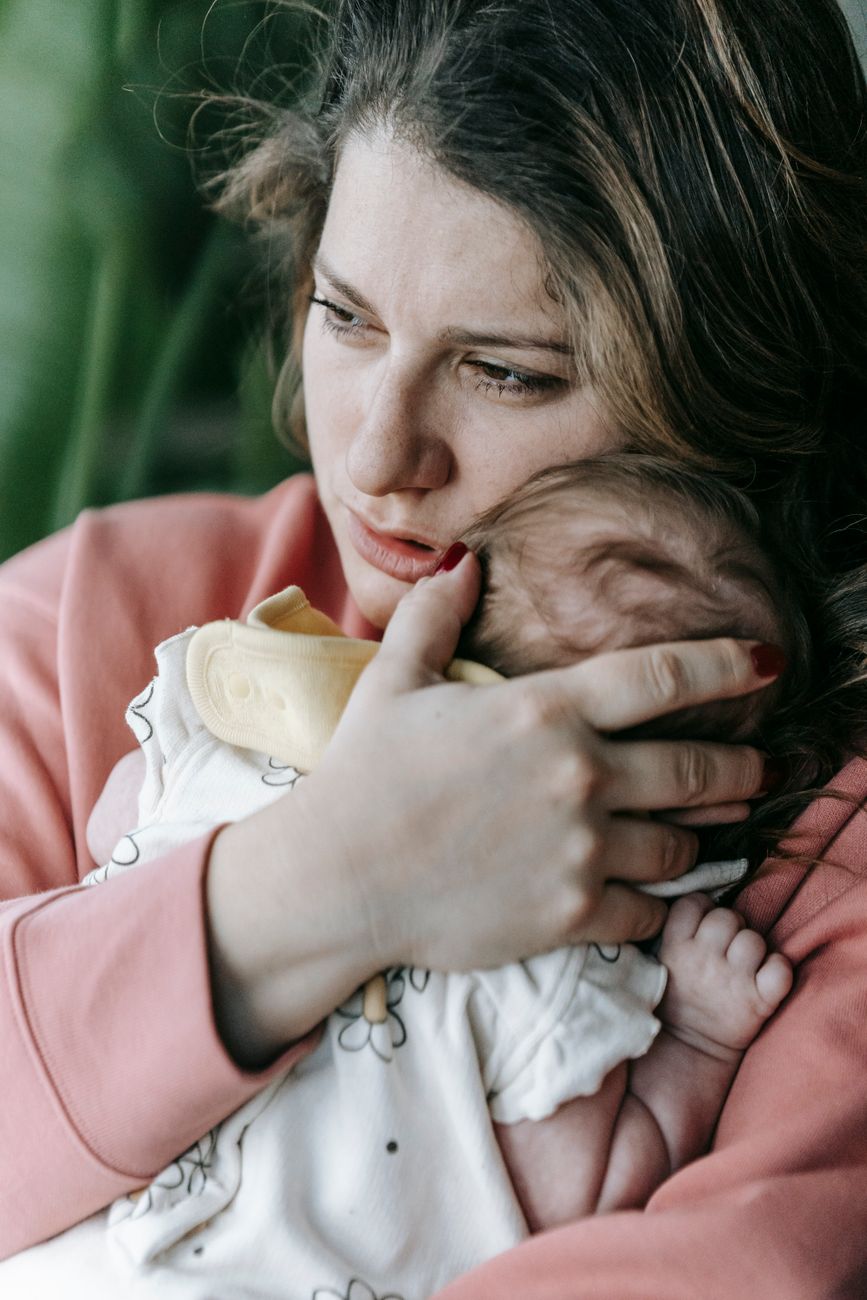
You were determined to do things differently from your own mother. And then it happens: you hear yourself speaking in exactly her tone. Or a wave of anger, overwhelm or guilt rises in you that is far bigger than the situation. Your child only dropped a cup.
Many women discover that the mother wound doesn’t stay behind in childhood. It comes alive again when they become mothers themselves. This is not a sign that you are failing.
It’s a sign that your nervous system recognizes something old.
What is the mother wound, really?
The term does not describe a clinical diagnosis. It describes a pattern: as a child, you did not receive from your mother the emotional care you needed. That can mean little empathy, little comfort, criticism instead of support, emotional coldness, or a role reversal in which you were responsible for your mother’s feelings from an early age.
Important: this doesn’t automatically mean your mother was a “bad mother.” Often she passed on what she herself had never known otherwise.
Naming a wound isn’t about blame. It’s about looking honestly.
Why it comes up with your own child
Especially in the early years, your child depends entirely on you. They cry, demand, need closeness and test your limits. In exactly these moments, your nervous system is reminded of the time when you were that small yourself.
You experience the situation as an adult and as the child you once were, at the same time. That explains why reactions can feel so out of proportion.
How the mother wound shows up in motherhood
- Perfectionism and constant guilt. You feel you are never enough. Every mistake feels like proof that you are failing as a mother. This often stems from a childhood in which love was tied to performance or compliance.
- Overreactions and anger. You are startled by your own volume or harshness. If you never got to learn how to deal with anger, it erupts unfiltered under stress, followed by shame.
- Difficulty allowing closeness. Some mothers feel an inner distance from their child even though they love them. Physical closeness can feel unfamiliar or even overwhelming, because closeness once wasn’t safe.
- The opposite: overprotectiveness. Others do everything so that their child never suffers what they went through. That sounds loving, but it costs enormous energy and leaves little room for your own needs.
- Triggers in contact with your own mother. Suddenly she interferes, comments, judges. You notice yourself becoming the daughter who justifies herself or withdraws.
- Fear of passing the patterns on. “I don’t want to become like her” accompanies many mothers. Behind it is often deep love for the child, but also constant inner pressure.
- Physical exhaustion without a clear cause. A permanently tense nervous system shows up as sleep problems, irritability and the feeling of never truly coming to rest.
What helps you heal the wound gently
Notice instead of judge
When you are triggered, ask yourself: “How old do I feel right now?” This question alone creates distance between then and now.
Calm your nervous system
Healing doesn’t begin in the head, but in the body. Breathing exercises, EFT tapping or small breaks help your system learn that the danger of back then is over.
Comfort your inner child
Give yourself what you needed back then: understanding, warmth, permission to feel. It sounds simple, but it is profound.
Repair instead of perfection
You don’t have to be flawless. If you raised your voice, you can apologize to your child and explain. This very experience of “rupture and repair” gives children security, and you may be experiencing it for the first time yourself.
Boundaries with your own mother
You may decide how much contact, interference and criticism you allow. That is not betrayal, it’s self-protection, for your family too.
Get support
If feelings become overwhelming, therapy or trauma counseling can be valuable support. That is a sign of strength.
Conclusion
The mother wound often shows up in motherhood exactly where it hurts most: in guilt, anger, distance, or the feeling of never being enough.
But this is also where the opportunity lies. When you start to recognize your patterns and treat yourself with compassion, you break something that may have been passed down for generations.
You don’t have to be perfect to do better.
It’s enough that you look.

If you notice that your nervous system is constantly on alert in everyday mom life, my EFT Tapping for Stressed Mothers offers practical scripts that calm you step by step.
And if the wound runs deeper and you want to work through it in a targeted way, the workbook “Emotional Healing After Narcissistic Abuse” guides you through understanding, grief, guilt and self-worth.
Part of the Circle with Heal your Spirit
Old patterns often echo across generations. How much of “generational healing” actually holds up scientifically is explored in “Ancestral Trauma and the Nervous System” on Heal your Spirit.
Leave a Reply